What Is 30-Second Monitoring?
TL;DR
30-second monitoring checks your site 2,880 times per day (vs 288 at 5-minute intervals), cutting the maximum undetected downtime window from ~5 minutes to 29 seconds. A failed check is verified from multiple global locations before an alert fires, so you only get notified when the outage is confirmed real - not a transient network blip.
What Is 30-Second Monitoring?
30-second monitoring is uptime monitoring that checks whether your website or application is online every 30 seconds. So that’s 2,880 times per day. Instead of waiting minutes between checks, a 30-second interval means the longest your site can be down without detection is 29 seconds.
Most monitoring services default to check intervals of 1 to 5 minutes. That might sound fast enough, but in practice it means an outage could go unnoticed for up to 5 minutes before a single alert fires. For any business that depends on its website being available, that gap is enormous.
Sub-minute monitoring closes that gap. By checking every 30 seconds, you get near-real-time visibility into uptime and downtime and you can respond to incidents before most of your users even notice something is wrong.
How 30-Second Monitoring Works
PingPing sends an HTTP request to your website from multiple global locations every 30 seconds. Each check records the HTTP status code and response time. If a check returns an unexpected result, such as a timeout, a 5xx error, or a response that doesn’t match your expected status, the system doesn’t immediately fire an alert.
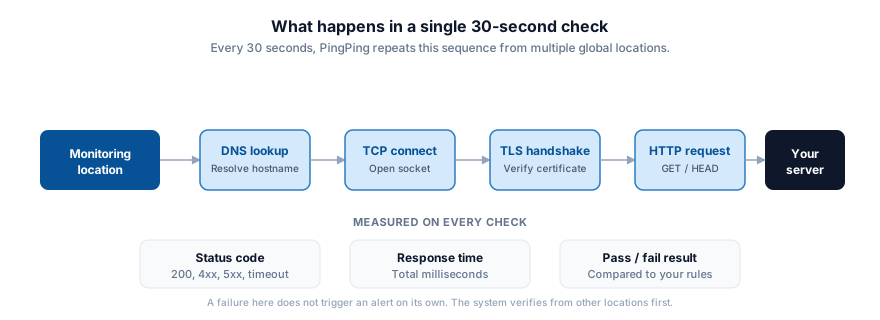
Instead, PingPing verifies the failure from additional monitoring locations. This multi-location confirmation step is critical. A single check can fail for reasons that have nothing to do with your server: a transient network route issue, a brief DNS hiccup at one resolver, or packet loss on a specific path. By requiring confirmation from independent locations before triggering an alert, PingPing ensures that when you get notified, the outage is real.
The result is a system that is both fast and accurate: checks happen every 30 seconds, but you only hear about genuine downtime.
30-Second vs 1-Minute vs 5-Minute Checks
The difference between check intervals isn’t just about frequency, but it determines how long an outage can exist before anyone knows about it. Here’s how the three most common intervals compare:
- 30-second checks: Maximum 29 seconds of undetected downtime. 2,880 checks per day. Catches brief outages that shorter intervals miss entirely, giving you the most complete picture of your actual uptime.
- 1-minute checks: Maximum 59 seconds of undetected downtime. 1,440 checks per day. Better than 5-minute intervals, but still leaves a full minute where an outage can go unnoticed.
- 5-minute checks: Maximum 4 minutes and 59 seconds of undetected downtime. Only 288 checks per day. Short outages, which are the kind that affect a handful of users and silently erode trust, are missed entirely.
Check intervals compared
How fast each interval catches an outage
Pick an outage length below to see which intervals would notice it before recovery.
- 30 seconds CATCHESMax undetected 29 secondsPer day 2,880 checks
Customer-facing SaaS, e-commerce, APIs with SLAs
- 1 minute CATCHESMax undetected 59 secondsPer day 1,440 checks
Smaller services with moderate revenue impact
- 5 minutes CATCHESMax undetected 4m 59sPer day 288 checks
Internal tools and hobby sites
- 15 minutes CATCHESMax undetected 14m 59sPer day 96 checks
Free-tier monitors. Misses most short outages.
"Max undetected" is the worst-case window an outage can exist before a check flags it. Average detection time is roughly half this number.
The math is straightforward: a 5-minute interval gives you 10x less visibility than a 30-second interval. If your site goes down for two minutes and recovers on its own, a 5-minute check may never even register it. A 30-second check will catch it every time. For a deeper look at why longer intervals create blind spots, read our guide on why 5-minute uptime checks aren’t enough.
Why Detection Speed Matters
Every second of undetected downtime has a cost. E-commerce stores lose sales. SaaS platforms see users hitting error pages and questioning reliability. And any business with an uptime SLA, undetected minutes quietly eat into your error budget.
The cost of website downtime compounds quickly. A 99.9% SLA allows roughly 8.7 hours of downtime per year. If your monitoring only checks every 5 minutes, you could burn through minutes of that budget without even knowing it happened. Faster detection means faster response, shorter incidents, and less damage to revenue and reputation.
Detection speed also determines how quickly your team can act. The difference between learning about an outage at 30 seconds versus 5 minutes is the difference between a quick restart and a prolonged incident that reaches your customers’ social media feeds. For more on why response time to incidents matters, see how fast should you know your site is down.
The False Positive Problem
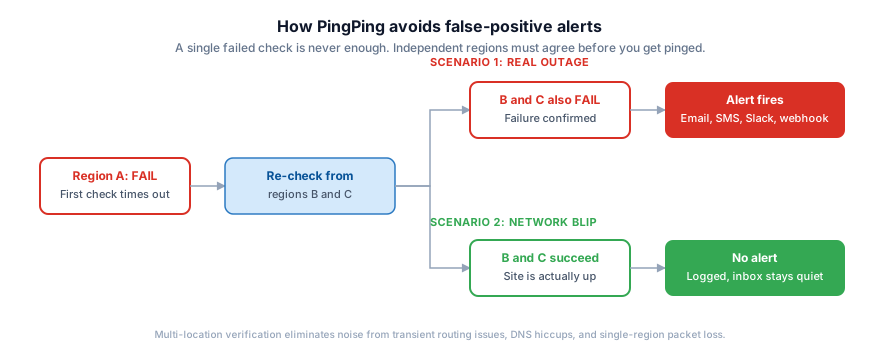
There’s an obvious concern with faster check intervals: more checks means more chances for a check to fail for reasons that have nothing to do with your server. A momentary network blip, a DNS cache miss, or congestion on a single route can all cause a check to timeout or return an error, even though your site is perfectly healthy.
This is why raw speed without verification creates noise instead of signal. A naive monitoring system that alerts on every failed 30-second check would flood you with false positives, training you to ignore alerts, which is worse than not monitoring at all.
PingPing solves this with multi-location confirmation. When a check fails from one location, the system immediately re-checks from additional independent regions. Only when the failure is confirmed from multiple locations does PingPing classify it as a genuine outage and send an alert. This means you get the speed benefit of 30-second checks without the noise penalty. Every alert you receive represents a real, verified problem that needs your attention.
Who Needs 30-Second Monitoring?
Any website or application where downtime directly translates to lost revenue, broken trust, or SLA violations benefits from sub-minute monitoring. Some use cases where 30-second checks are especially critical:
- SaaS applications: Your customers are paying for access. If your app is down, they notice immediately and they remember.
- E-commerce stores: Every minute of downtime during peak hours can mean thousands of dollars in lost sales. A checkout page that fails for three minutes during a product launch is a disaster a 5-minute check might miss.
- API providers: Your API is a dependency for other businesses. Outages cascade downstream, and your SLA commitments demand that you know about issues before your customers do.
- Solo founders and small teams: When there’s no dedicated ops team watching dashboards, fast automated alerts are your first line of defense. 30-second monitoring acts as the always-on team member you can’t afford to hire.
Check frequency
Who benefits most from 30-second monitoring
If a missed minute hurts you, sub-minute checks are not optional.
-
SaaS applications
30 secondsWhy it matters
Customers pay for uptime. Every error page chips at trust and renewal odds. One bad incident remembered at contract renewal can cost you the deal.
-
E-commerce stores
30 secondsWhy it matters
Checkout outages during peak hours cost real revenue in minutes. Shoppers don't wait. They refresh once, then buy from a competitor.
-
API providers
30 secondsWhy it matters
Outages cascade to downstream customers. SLA budgets shrink by the second, and your clients' status pages start blaming your service.
-
Solo and small teams
30 secondsWhy it matters
No 24/7 ops team. Fast alerts are your first line of defense against silent outages. You need to know before your users do.
Hobby blogs and internal tools can usually live with 1-5 minute intervals. Anything customer-facing should not.
If you’re running a business on your own, our guide on website monitoring for solo founders covers how to set up reliable monitoring without the complexity. And if you’re new to the concept entirely, start with our uptime monitoring guide.
PingPing: 30-Second Monitoring for Everyone
Most monitoring tools treat fast check intervals as a premium feature. Want sub-minute checks? Upgrade to the enterprise plan. This creates an absurd situation where the businesses that can least afford downtime (startups, solo founders, growing SaaS products) are stuck with the slowest monitoring.
PingPing takes a different approach. 30-second monitoring is included on every plan, because fast detection shouldn’t be a luxury. Every site you monitor gets checked every 30 seconds from multiple global locations, with multi-location verification and instant alerts via email, SMS, Slack, and more.
There are no tiered check intervals and no premium fees for faster detection. Every plan includes 30-second checks with multi-location verification.
Never miss an expiry
See how PingPing compares to UptimeRobot, Pingdom, and Better Stack.
Related guides
What is uptime monitoring?
A complete overview of how uptime monitoring works and what to look for in a monitoring service.
Why 5-minute uptime checks aren't enough
How longer check intervals create blind spots that let brief outages slip through undetected.
Website monitoring for solo founders
How to set up reliable uptime monitoring without a dedicated ops team.